
Saturday, 19 January 2013

Rachel's
From the group work my friends and I have done, I
have learnt and understand better Autism/autism spectrum disorder and children
who is having this disability. From the group findings, “They find it difficult to express their
emotions and thoughts…” tells me a lot on autism as having difficulty to
express emotions and thoughts, meaning that children who has autism lack social
and emotional skills. The lack in these skills causes them to have difficulty
interacting with their friends. The negative impact on the classroom is due to
lack of social and emotional skills is that teachers may find it
challenging to handle autistic child because their behavior are unpredictable
and it requires a lot of time and effort for them to establish a relationship
with the child. At the same time, other children may be judgemental towards this
child and unwilling to befriend with the child because the child is
“different”.


Based
on my reflections, the positive impact I would bring into the classroom is
perhaps to create an environment where distractions such as bright lights and
loud sounds are prevented as they may interfere with learning or comfort. In
curriculum aspect, I would also explore a variety of sensory environment with
the child to determine which one is most conducive to learning since some
children learn better when moving or using their hands, while other children
may require silence in order to concentrate. As for the curriculum, I would try
to plan a similar area of interest where the children are interested in to
improve attention and focus during activities. It would also be helpful if I
use pictures and other visual aids during teaching, as children with autism are
visual learners. Lastly, I will also ensure to have consistent and fixed routines
so children with or without autism will feel secure, as even the slightest
disruption in schedule can cause tantrums. Most importantly, it is to be patient
with both the child, and myself so that I could help the child to reach his/her
fullest potential.
In conclusion, I feel that everyone has
an opportunity to learn together despite whether the child has a disability or
not. In the case of having a child with disability, it is important for the
teacher to be understanding and responsible by planning activities like having
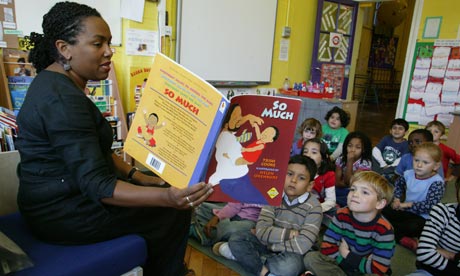
to read stories to normal children about autism for them to understand and
accept that could include the child in, despite any challenges faced.
Jacqueline's
Through the group findings
on the characteristics of the disability, I learnt autism is characterized by
the lack of social and emotional abilities. Due to this disability, they tend
to be alone as establishing a relationship is difficult for them. Children
would not want to play with children with autism due to the inability to
express themselves well. They are also unable to handle when there are changes
in something they do daily and find it too overwhelming. Even their
surroundings with minimum noise being made, it is still overwhelming to them.

In the classroom, routines
will be strictly followed according when there is a child with autism. A
partner, who is more developed in cognitive domain, would be paired with the
autistic child. The partner would be able to understand that the autistic child
is special and try his/her best to help the autistic child in every way. The
classroom that has an autistic child would also be far away from the noisy
areas in the centre such as the shower area and waiting area. Group work would
also be more frequent. By involving children to do group work, they will open
up to the autistic child and accommodate the autistic child. In another way,
the autistic child will slowly learn to express himself/herself and wont left
out.

Szer Chyi's
As
there are different types of autism and it ranges in severity, the
characteristic of each individual would be different as well. In general,
children with classical autistic disorder often face difficulties in acquiring
social and interacting skills. They find it difficult to understand other
people, thus hindering them from forming good relationships with others. They
do not know how to express their thoughts and feelings and have difficulties
controlling their emotions which eventually affects their social interaction
with people. Furthermore, it is difficult for them to communicate with others
as they do not have the necessary language skills. They are always in their own
world and are also inflexible in their behaviors. They flaps, get fascinated by
spinning objects and get attached to certain objects.
In
order for autistic children to learn effectively, we have to create a well-
structured and supportive environment.
Sudden changes would increase anxiety in the child, thus such changes
need to be avoided. Furthermore, providing individual time table with visual
aids for these children would be good.
It tells them about what is going to happen next and thus, they are
reassured and prepared. We need to always encourage children to participate in
activities. This allows them to form relationships with others and practice
necessary social skills. Peers around could also help to aid the autistic child
as well. The autistic child would also be less isolated and is able to form
friendships with the rest. We have to take physical environment into
considerations too.


Different floor mats and soft furnishing allow us to create
a calm and soothing environment for children. Furthermore, it could also serve
as boundaries which help children to better recognize which activities take
place at which corners. Materials like stress balls are also good for children
as it helps them to retreat when necessary. As an autistic child can be very
sensitive to lights, smell and noise etc, it is important for us to create a calm
environment for them. Our voices and body language could cause anxiety in
them, thus we need to pay attention to it and make the necessary changes when
handling an autistic child. Also, most children with autism are visual learner,
they need more demonstrations rather than verbal instructions.

Angela's
I understand from this assignment that children with
autism are very different from other children. Not only do they need more
guidance, they need a different approach to learn. Children with autism learn
better with clear visual instructions. Hence it is best to provide them with
instruction sheets that have pictures as they do not learn well with abstract
instructions. The instructions should be number and arranged according to the
number so that they will not have a hard time following it.


I also learnt that
sometimes teachers tend to neglect an autistic child from the rest of the class
because they are different or requires different help. The child might be
slower than the rest and lose focus easily. Due to this, teachers might want to
go back to them after they finish teaching the rest of the class. However, time
might not allow them to do so. This is when adaptations for the child with
autism become important. Teachers will need to think of adaptations to include
the child with the rest of the class. So in the same period of time, all the
children can complete the work together at the same time.
Adaptations can be
providing the child with autism with a picture instruction sheet, while the
rest of the class listens to verbal instructions. Also do not choose an
activity that is too time consuming. The teacher can break down the lesson into
different parts and implement it over several periods. This will give the child
some time to regulate and not be too overwhelming.


Subscribe to:
Comments (Atom)